facebook.com
كلماتٌ عن عين سلمان — عادل مفيد
Open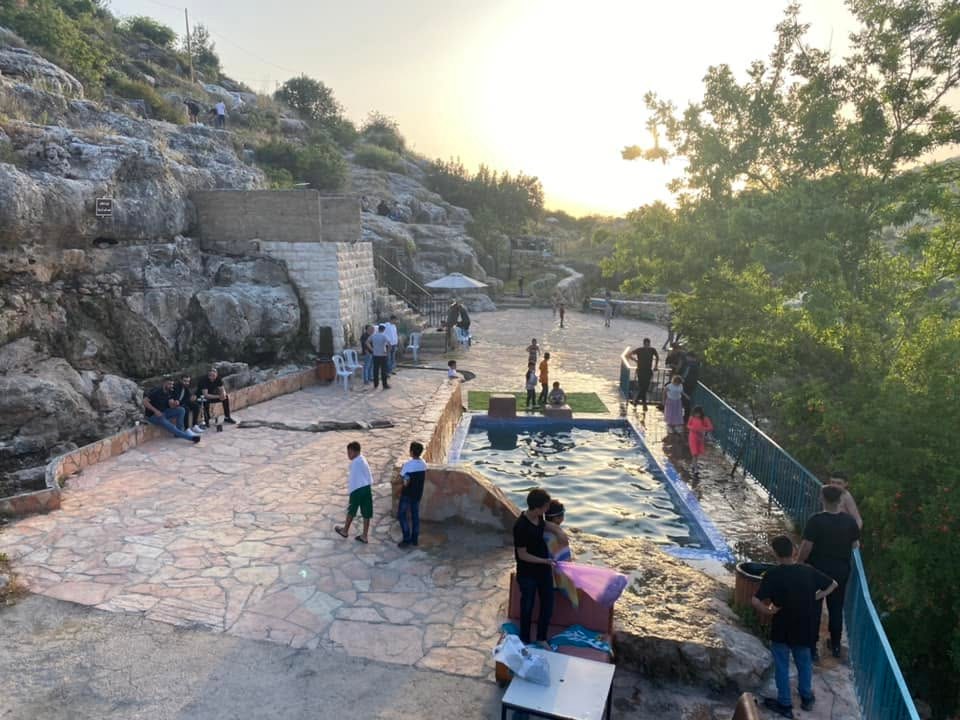

A natural and historical landmark north of Beit Duqqu
A spring brimming with life, and a fortress that has guarded the valley for ages — discover it, breathe the outdoors, and hear the story carved in stone.
The story of the place
Ein Salman lies north of Beit Duqqu village west of Jerusalem, at an elevation of about 500 meters above sea level, with its high vantage point looking out toward the Palestinian coast to the west.
Ein Salman is an abundant natural spring — a rock cavity lined on its sides to hold a large amount of water, flowing into a pool 6 meters long and 3 meters wide and deep, whose water was used for drinking and irrigation.
A few meters from the spring stands Salman Fortress, whose current structure dates to the Crusader era atop older Byzantine foundations, later reused during the Ottoman period. The fortress holds several rooms and halls with distinctive stone arches, and the remains of a fortified tower once used to watch over and protect the surrounding area.
The site holds archaeological evidence from ancient periods attesting to the area’s long human settlement, and the fortress’s outer courtyard was once a stop where travelers would rest and regain their energy. Today, directional signs from within Beit Duqqu lead visitors to the site, part of the "Vineyards to Beit Duqqu and Ein Salman" trail linking the village’s vineyards to the spring and fortress.
500م
elevation above sea level
6×3م
Spring pool dimensions
Crusader
Fortress-building era
North
Location relative to Beit Duqqu
From Byzantine foundations to a landmark visited today.
Byzantine
The first foundations
The oldest building remains at the site, forming the base of today’s fortress.
Crusader
Building the fortress
Salman Fortress was built in its current form atop the Byzantine foundations.
Ottoman
Reuse
The fortress and spring were reused during the Ottoman period as a waystation and water source.
Today
A landmark visited today
Signs from within Beit Duqqu lead visitors to the site along the vineyards trail.
Tap a card to discover more.
From the valley
Real videos from Beit Duqqu’s official Facebook page.
وادي سلمان خلال المنخفض الأخير
Video · Beit Duqqu
لقطة من عين سلمان
Video · Beit Duqqu
ريل من عين سلمان
Video · Beit Duqqu
From the village page
A real post from one of the village’s own residents, expressing his connection to Ein Salman and its old stones.
Directional signs from within Beit Duqqu lead visitors to the site.
The vineyards trail runs about 7 km, passing Mount Baritta and a historic inn before reaching Ein Salman and Beit Duqqu.
Close to Ein Jafna and Khirbet Jafna, for those who want to extend the trip.
A living archaeological site — enjoy your visit, and help keep it intact for those who come after you.